Structural & chemical biologist · Protein regulation · Cancer · Neurodegeneration · Molecular discovery

Lukasz Jaremko, PhD

Biomolecules in motion: from molecular recognition to chemical intervention.

Chromatin & cancer · Protein dynamics & recognition · IDPs & neurodegeneration · Chemical probes & drug discovery

I study how regulatory proteins and molecular assemblies move between functional states, how mutations and post-translational modifications reshape those states, and how these changes contribute to cancer and neurodegeneration. My research spans chromatin regulation and oncogenic enzymes, transient molecular recognition, intrinsically disordered proteins and aggregation, with a common goal: define the molecular states that control function and identify where small molecules can inhibit, stabilize, redirect or rescue them. I use nuclear magnetic resonance (NMR) spectroscopy together with structural, biophysical and biochemical methods to resolve these mechanisms and guide chemical probes and therapeutic candidates.

Portrait photograph
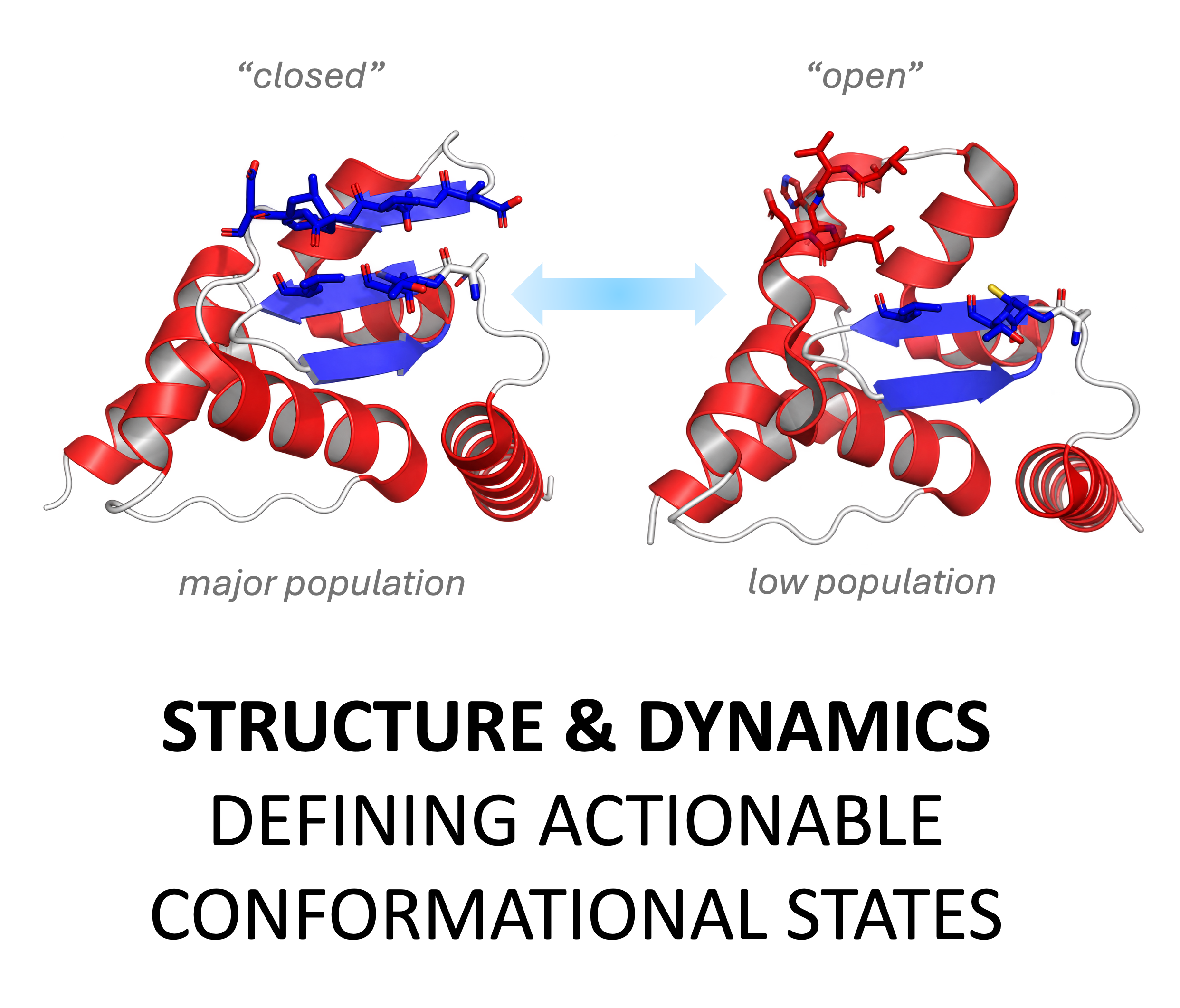
Closed and open conformational states showing major and low-population states
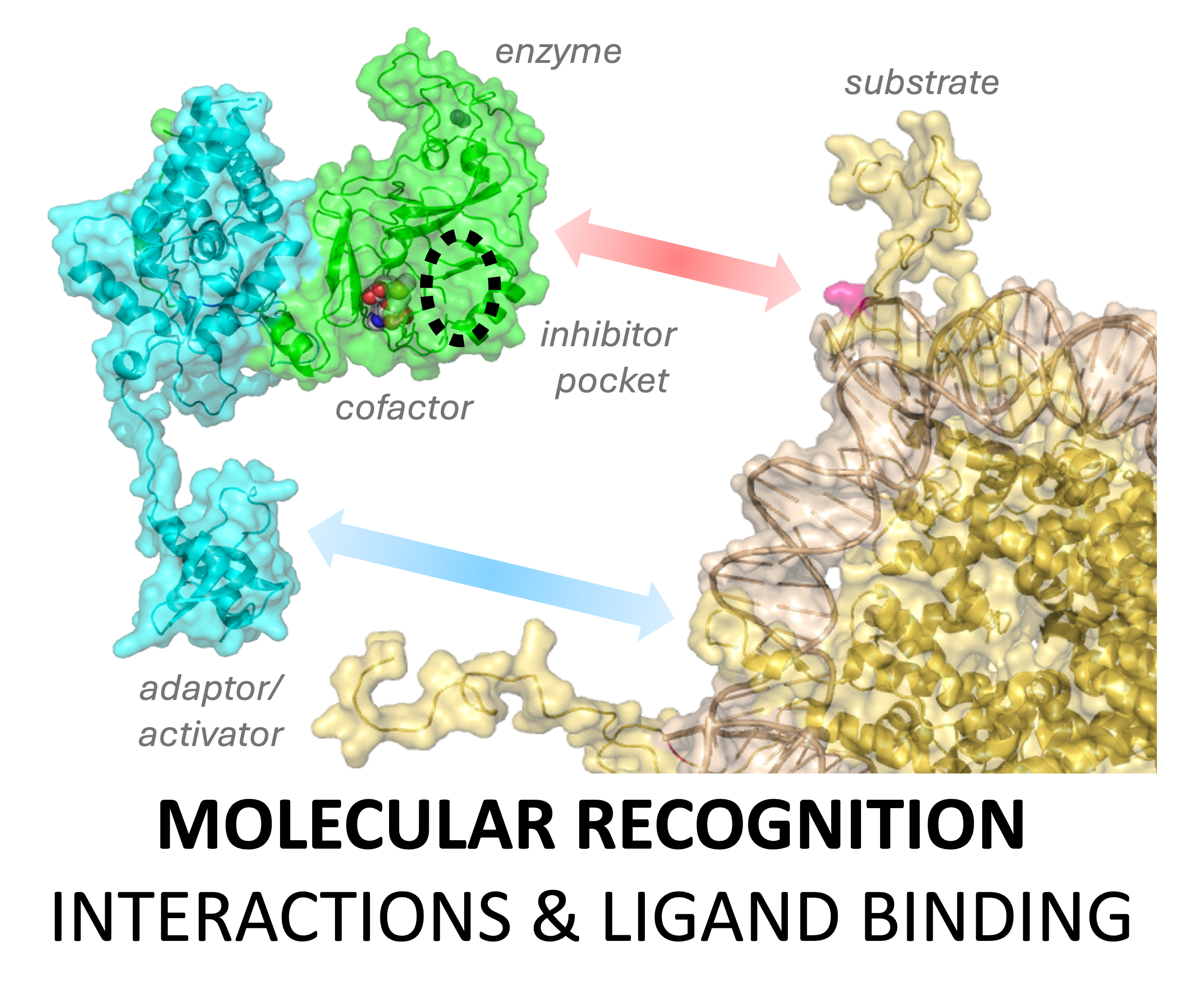
Molecular recognition among enzyme, substrate, cofactor, adaptor and inhibitor pocket
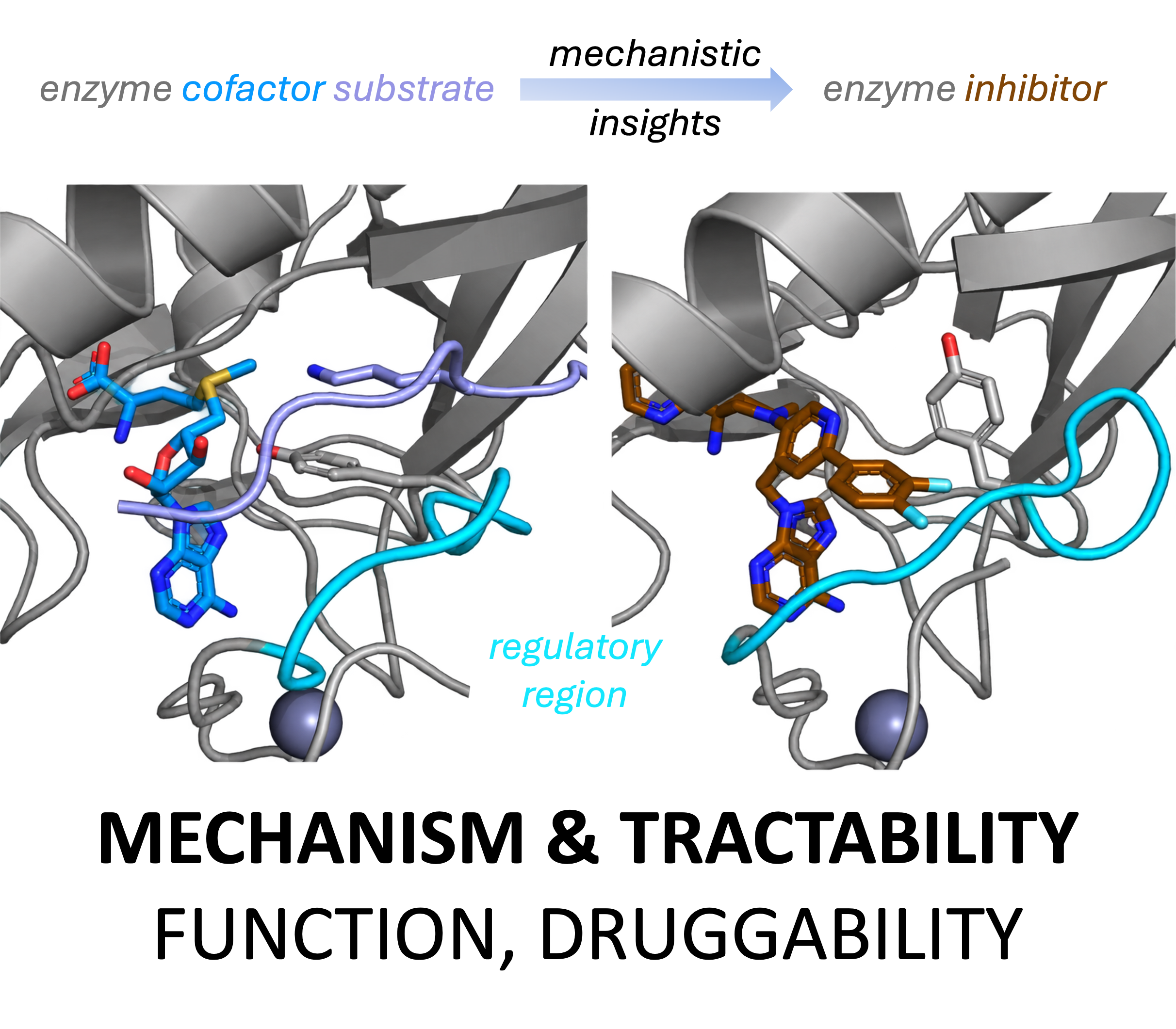
Mechanistic comparison of substrate-cofactor and inhibitor-bound states with a regulatory region
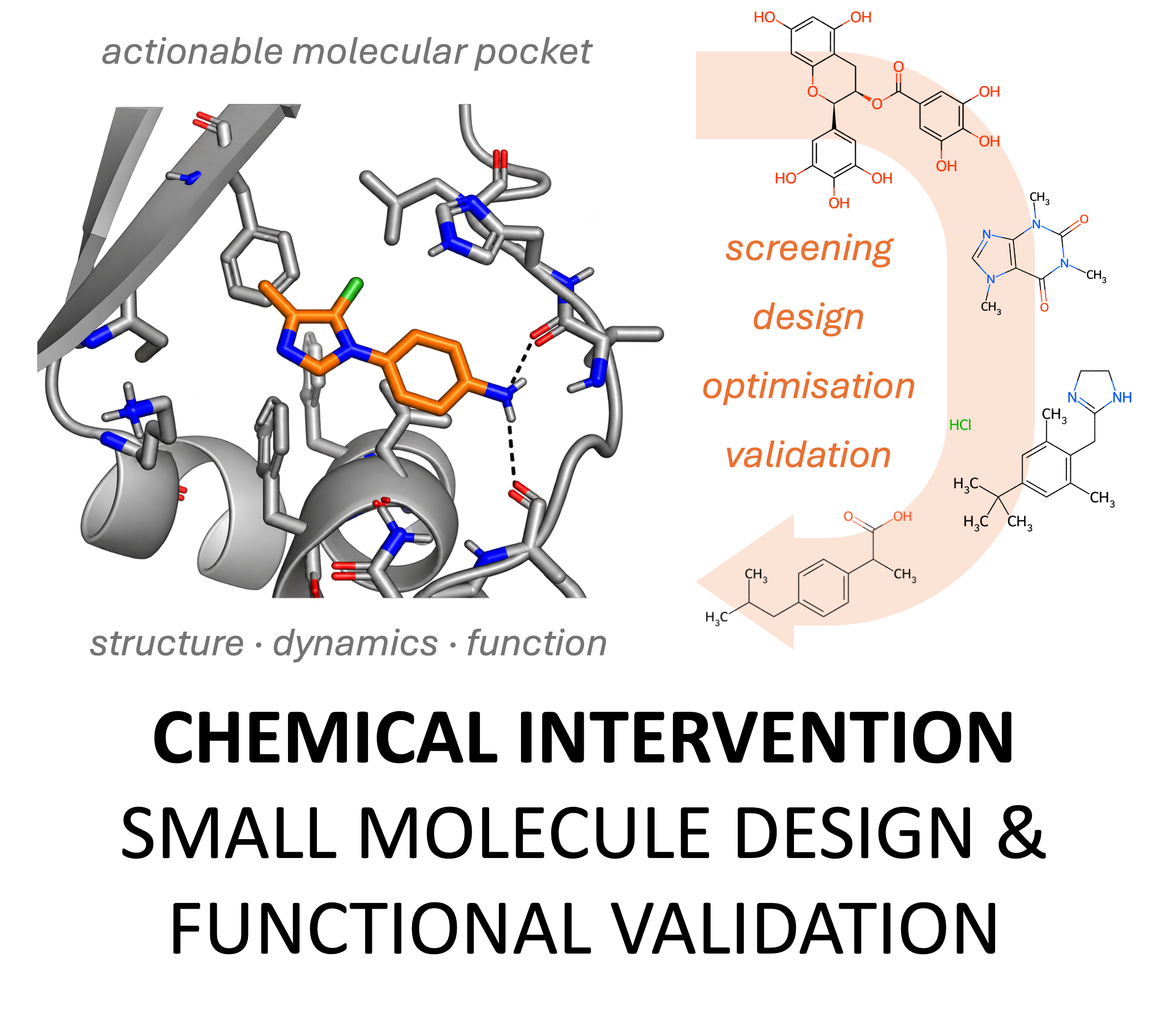
Actionable molecular pocket connected to screening, design, optimization and validation

Approach

The states that govern molecular function and ligand response.

AI-based structure prediction, cryo-electron microscopy (cryo-EM) and crystallography increasingly provide detailed molecular structures. My work asks what those structures do in solution: which states are populated, how they interconvert and recognize partners, how mutations and post-translational modifications reshape them, and how ligands alter function. NMR spectroscopy is central because it can directly quantify transient, low-population and heterogeneous states and reveal binding sites that static structures may miss. I integrate these measurements with X-ray crystallography, cryo-EM, quantitative solution biophysics, biochemical and cellular validation, and computational structural biology to connect molecular architecture with mechanism and chemical intervention.

Core approaches Biomolecular NMR · X-ray crystallography · cryo-electron microscopy · quantitative solution biophysics · biochemical and cellular validation · computational structural biology

Research

From molecular mechanism to chemical intervention.

Chromatin regulation & transcriptional control

I study cancer-relevant regulatory proteins, including lysine methyltransferases such as the NSD family of histone H3K36 methyltransferases, and transcription factors such as BTB/POZ-domain zinc-finger proteins. I define how their conformational states, molecular interactions and disease-associated mutations regulate activity, and how these mechanisms create opportunities for selective small-molecule intervention.

Protein dynamics & molecular recognition

I define protein dynamics and transient protein–protein, protein–ligand and protein–nucleic acid interactions, integrating these measurements with molecular architecture to understand how regulatory states and molecular interactions control biological function.

IDPs, disorder, aggregation & heterogeneous states

In intrinsically disordered proteins such as α-synuclein and tau, I resolve early association, metal and ligand interactions, and heterogeneous oligomeric states relevant to neurodegeneration to understand how these processes shape aggregation, assembly and ligand response.

Chemical probes & small-molecule discovery

I identify and validate ligandable states, map actionable molecular pockets, define how ligands, including inhibitors, modulate molecular function, and use screening and structure-guided design to develop chemical probes and advance promising compounds toward therapeutic application.

Methods & technology development

Sharper signals. Faster measurements. Quantitative molecular insight.

NMR relaxation & enhanced detection

I develop and apply NMR relaxation experiments and analysis to improve the accuracy and sensitivity of protein dynamics measurements and extract quantitative parameters of molecular motion. I also apply protonless NMR, including low-γ direct 13C and 15N detection, particularly for intrinsically disordered proteins (IDPs) and intrinsically disordered regions (IDRs), to overcome spectral signal overlap and limitations associated with exchangeable protons in conventional 1H-detected NMR.

Natural products & metabolomics

I develop and apply NMR methods that shorten measurement times, increase sensitivity, resolve spectral overlap and enhance the detection of low-abundance metabolites, enabling their de novo identification or confirmation in complex biological mixtures and natural-product samples.

Selected work

Structure, dynamics, biochemical mechanism and small-molecule discovery.

Chromatin & cancer Epigenetic enzymes Protein dynamics Molecular recognition IDPs & aggregation Conformational ensembles Biomolecular NMR X-ray crystallography Biophysical chemistry Ligand binding Cryptic pockets Fragment screening Chemical probes Structure-guided design Drug discovery Natural products & metabolomics AI-informed structural biology

Scientific leadership

Building shared platforms, collaborations and research programs.

Since 2017, I have led independent research groups and university-wide initiatives integrating ambitious research programs, shared infrastructure and external funding. I led the acquisition of a new 800 MHz high-field NMR platform and modernization of 700 and 950 MHz systems, including TCI, TXO and QCI-F cryogenic configurations for sensitive 1H, direct 13C/15N and biomolecular 19F detection. A 3.2 mm E-free MAS capability extended the platform to membrane proteins, oligomers, large assemblies and aggregates, while automation and an NMR-based metabolomics workflow expanded access to higher-throughput and complex biological samples.

These investments were developed as broadly accessible research platforms serving departments and external partners, including hospitals, medical schools, research institutes, startups and companies. Training, collaborative access and method development expanded the user base and translated infrastructure into new projects, publications, collaborations and competitive funding.

More broadly, I have led and co-led the development and modernization of research infrastructure spanning challenging protein production, biophysical characterization, X-ray crystallography, cryo-EM, advanced spectroscopy, small-molecule discovery, analytical platforms and higher-throughput instrumentation. My roles have included defining scientific priorities, building faculty and institutional support, securing funding, contributing to an NIH C06 proposal, steering core facilities and multi-million-dollar infrastructure investments, and participating in faculty recruitment and evaluation. The consistent objective has been to build research capacity that enables experiments previously not possible, strengthens grants and partnerships, trains researchers and raises institutional scientific visibility.

>$7Mcompetitive funding supporting research programs since 2019
>$8Minstitutional start-up and program research support attracted since 2017
>$6Muniversity-wide research infrastructure investment led or co-led since 2017
Since 2017independent research leadership
110+scientific publications
40+researchers and trainees mentored

Teaching & training

Teaching science through measurement, mechanism and application.

I have taught undergraduate and graduate courses spanning mathematics, NMR spectroscopy, electron paramagnetic resonance (EPR), biophysical chemistry and advanced molecular instrumentation. My teaching connects quantitative principles with real measurements: how signals arise, what an experiment can resolve, how to choose an appropriate experiment, and how data become mechanistic understanding in structural biology and molecular discovery.

Hands-on work with research instruments and real datasets prepares students for both research and technology-driven careers. Former trainees have progressed to independent academic research and to scientific roles in industry, analytical and regulatory science, and core facilities. I want students to connect theory with experiment and molecular measurement with mechanism and application.

Contact

Research, collaboration and academic leadership.

Open to collaborations in structural biology, chemical biology and molecular discovery, as well as scientific leadership opportunities across research-intensive organizations. Selected scientific advisory work focuses on molecular mechanisms, structural evidence, target tractability and discovery technologies.

Direct contact

[email protected]

Structural biology · Solution biophysics · Chemical biology · Research leadership